

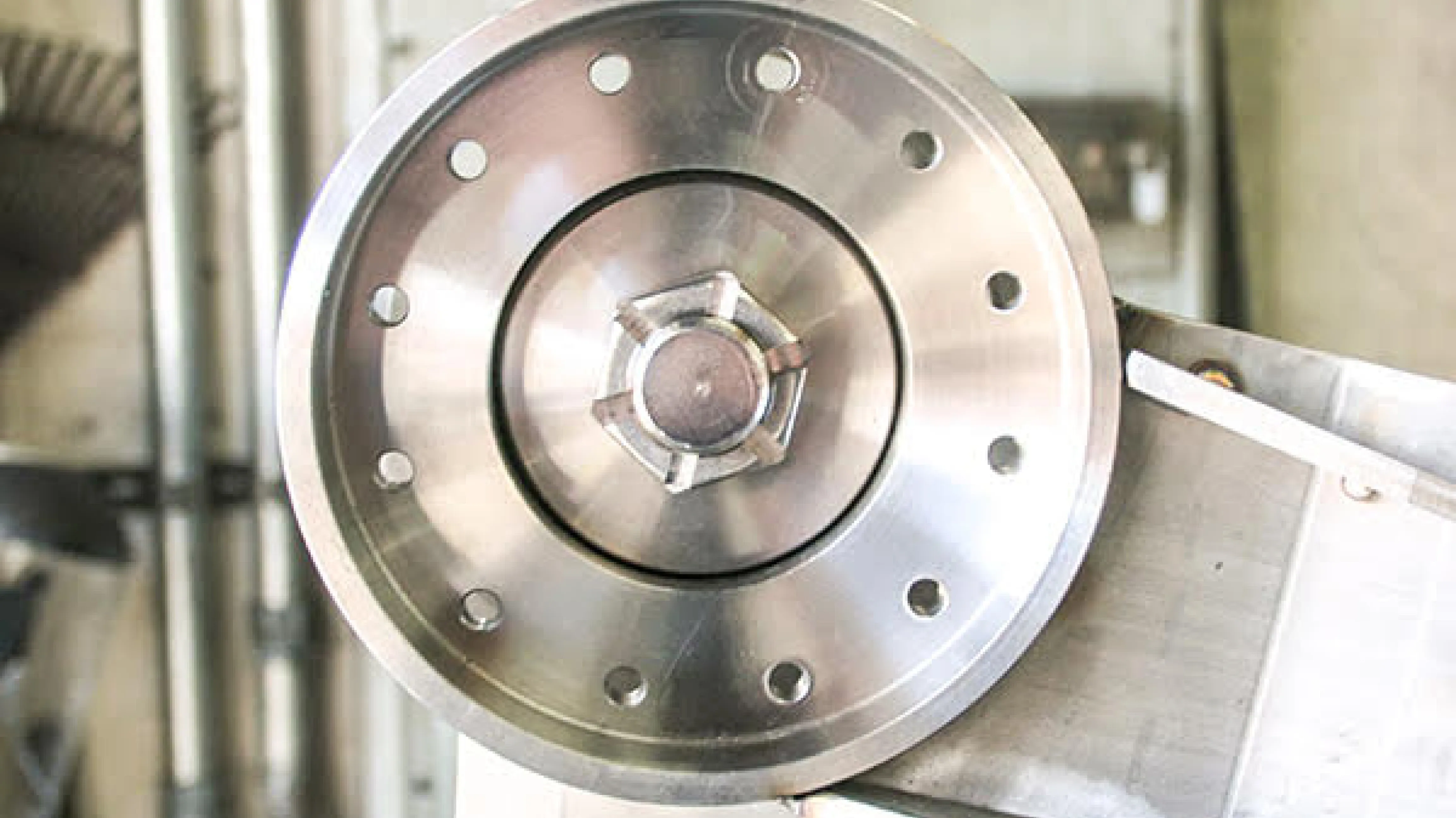
Large-scale fabrication projects come with complex machining challenges. Learn how a U.S.-based Southern California precision machining partner helps OEMs maintain quality, tight tolerances, and production efficiency.
Large-scale fabrication projects demand far more than standard machining capability. As component size and complexity increase, so do the technical challenges that can impact dimensional accuracy, structural integrity, and delivery timelines.
For OEMs and industrial manufacturers searching for a precision machining partner, understanding these challenges is critical. The difference between a transactional job shop and a true long-term metal fabrication partner often becomes most apparent when projects scale up.
Below are the most common machining challenges in large-scale fabrication — and what separates experienced contract manufacturers from the rest.
Maintaining Tight Tolerances on Large Components
Holding tight tolerances across large fabricated parts is significantly more complex than machining small components. As size increases, so does the potential for:
- Material deflection
- Thermal expansion
- Tool vibration
- Accumulated dimensional variation
In large-scale CNC machining, even minor inconsistencies can compound over extended surfaces.
An experienced precision CNC machining partner addresses this with rigid fixturing strategies, calibrated tooling systems, and disciplined in-process inspection procedures. Maintaining consistency in high tolerance machining services requires process stability developed through repeat production experience — not just machine capability.
Manufacturers that regularly support OEM machining partnerships understand that tolerance control must be engineered into the workflow from start to finish.
Material Movement and Structural Stability
Large fabricated components often involve heavy plate, structural weldments, or specialty alloys. During machining and welding, internal stresses can release and cause unexpected movement.
Without proper sequencing and stress management, parts may shift out of specification after machining appears complete.
Through controlled weld sequencing, stress relief practices, and strategic material removal planning, experienced fabrication teams minimize distortion before it impacts final tolerances.
This expertise is particularly valuable in custom metal fabrication for industrial equipment manufacturers, where structural stability directly affects performance and safety.
Heat Management and Tool Wear in Extended Production Runs
Large-scale machining often involves deep cuts, extended cycle times, and high material removal rates. These conditions accelerate tool wear and generate significant heat, both of which can affect surface finish and dimensional accuracy.
In repeat production machining, consistency across hundreds or thousands of parts is essential. Tool degradation or temperature fluctuation cannot be allowed to introduce variability over time.
An established industrial CNC machining partner monitors tool life, optimizes cutting parameters, and maintains preventative maintenance schedules to protect long-term production integrity. Experience in extended production environments ensures that quality remains stable from first article to final shipment.
Weld Distortion and Post-Fabrication Machining
Many large-scale projects require both fabrication and precision machining. One of the most common challenges is managing weld distortion before final machining operations.
Improper weld sequencing or insufficient planning can cause alignment issues that require costly rework.
An integrated metal fabrication and machining partner coordinates fabrication and CNC operations within a unified process. By planning for machining allowances, controlling heat input, and verifying alignment prior to final cuts, experienced teams maintain dimensional integrity throughout the build cycle.
For companies seeking a long-term fabrication partner, this integration reduces delays and protects production schedules.
Quality Control Across Large Assemblies
Inspection complexity increases with part size. Large fabricated components require structured quality systems capable of verifying dimensions across extended surfaces and multiple critical points.
A reliable precision machining services provider incorporates:
- In-process verification
- Final dimensional inspection
- Documented quality control procedures
- Traceable reporting for repeat orders
For OEMs evaluating a contract machining company, consistent quality documentation signals operational maturity. Maintaining uniform standards across multi-year production programs requires established systems — not reactive inspection.
Capacity Planning and Production Stability
Large-scale fabrication projects often involve long-term contracts and recurring production schedules. Delays at any stage can disrupt downstream assembly or installation timelines.
An experienced long-term machining partnership is built on predictable scheduling, machine uptime, and workforce depth. Capacity planning, preventative maintenance, and efficient workflow management ensure that increasing production demands do not compromise quality.
For manufacturers searching for a precision machining partner in Southern California or beyond, the ability to scale without sacrificing consistency is a defining advantage.
Why Experience Defines Success in Large-Scale Fabrication
Large-scale machining challenges are not solved by equipment alone. They require seasoned machinists, disciplined engineering processes, and long-term operational experience.
Companies seeking a custom metal fabrication partner for industrial applications should evaluate more than technical capability. Look for:
- Demonstrated repeat production experienceIntegrated fabrication and machining expertise
- Structured quality systems
- Scalable production capacity
- Commitment to long-term OEM partnerships
- Partnering for Long-Term Manufacturing Success
Final Thoughts
Large-scale fabrication introduces complexity, but it also creates opportunity for stronger collaboration. The right metal fabrication and CNC machining partner brings the experience, process discipline, and engineering insight necessary to manage complexity with confidence.
For OEMs and industrial manufacturers seeking a long-term metal fabrication partner, expertise in large-scale machining ensures:
- Reduced production risk
- Stable quality across repeat orders
- Predictable lead times
- Improved total cost control
In complex manufacturing environments, consistency compounds. The right partnership turns large-scale fabrication from a challenge into a competitive advantage.

Director of Operations
Jonathan Nguyen is a supply chain and operations leader with more than 22 years of experience driving procurement, vendor management, international logistics, and operational excellence across diverse industries. Throughout his career, he has developed… Read More