

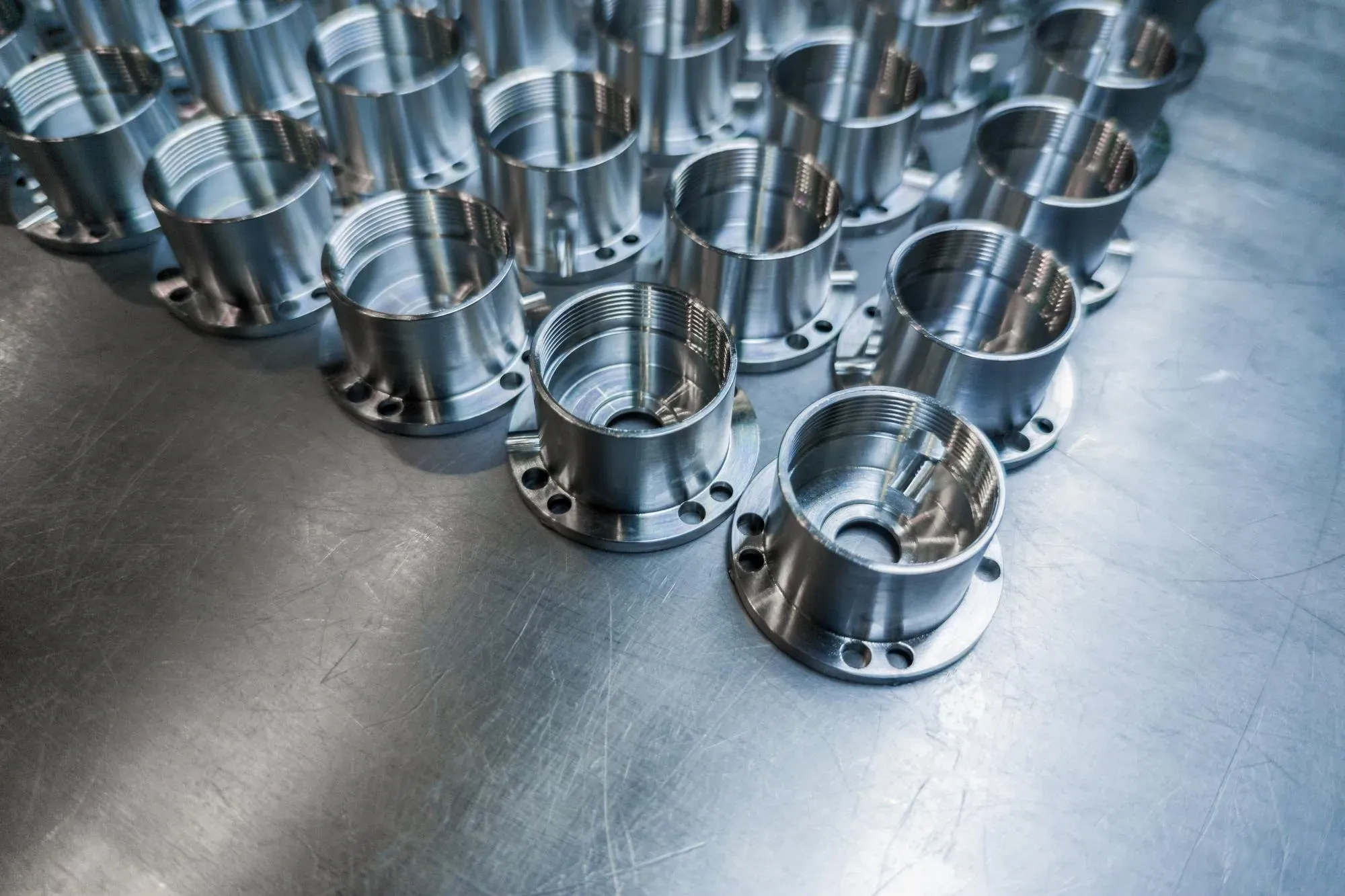
Custom sheet metal fabrication helps OEM procurement teams eliminate assembly failures through tight tolerances and proven processes.
OEM procurement teams bear the operational burden of sourcing components that consistently perform across high-volume production cycles. When a fabricated part arrives out of tolerance or with a misaligned interface, the downstream cost extends well beyond a single rejected shipment. Custom sheet metal fabrication addresses this risk by aligning design intent with verified shop floor capabilities from the earliest stage of engagement.
Integrating precision CNC machining with forming processes produces enclosures and structural assemblies that reliably meet dimensional requirements, reducing rework and line stoppages that erode program margins.
People Also Ask
Why do sheet metal parts not fit during assembly?
Even when individual parts are within spec, small variations in bends and hole alignment can compound across multiple components (tolerance stack-up), creating gaps or interference at fit-up. Designs that rely on manual forcing/visual alignment, or lack self-locating features (such as properly sized tabs/slots), are more likely to cause rework and scrap during assembly.
What are standard tolerances for sheet metal parts?
Standard tolerances vary by process and feature, but common examples include about ±1° for bend angle and roughly ±0.005" to ±0.010" for laser-cut hole size (with looser tolerances often seen for punching and welded assemblies). Because tolerances depend on material, part size, and fabrication method, drawings often use a general tolerance block, with tighter callouts only where function requires them.
What is CNC machining used for?
CNC machining is used to produce precise, repeatable custom parts by using programmable controls to shape raw material into complex geometries. It’s commonly used for components in industries such as automotive, medical, aerospace, and electronics, where consistent fit and tight tolerances are important.
Why Custom Sheet Metal Fabrication Reduces Assembly Failures
Assembly failures most often trace back to tolerance stack issues that were never resolved during design review. When mating surfaces carry excessive variation, vibration, premature wear, and fastener loosening follow. Custom sheet metal fabrication disciplines the process by establishing tight tolerances on every critical interface before a single production run begins.
Design for manufacturability reviews flag bend sequences that would introduce springback or distortion in complex geometries. Early shop floor involvement catches these issues before tooling changes become expensive production interruptions, producing components that fit, function, and hold up throughout the assembly's full service life.
Core Methods Used by a Sheet Metal Fabrication Company
A capable sheet metal fabrication company applies a coordinated set of methods rather than treating each operation in isolation. Precision laser cutting and CNC press brake forming maintain dimensional consistency across complex enclosure profiles. Weld joint placement is strategically planned so that every seam is accessible for visual and dimensional inspection, thereby supporting verification of structural integrity without destructive testing.
In-house prototyping closes the gap between engineering intent and production reality, allowing procurement teams to validate form and function before committing to full production volumes. This integrated approach reduces the risk of discovering fit issues only after tooling has been invested in.
The Step-by-Step Custom Sheet Metal Fabrication Process
The fabrication workflow begins with a thorough design review that assesses tooling accessibility, material behavior, and the feasibility of the bend sequence. Each phase builds on the previous one, and skipping or compressing any step introduces compounding risk that surfaces later in the production cycle.
- Design review: engineers evaluate drawings for manufacturability, flagging features that would require non-standard tooling or create tolerance risk. This is where DFM principles are applied to identify geometry conflicts, minimum bend radius violations, and hardware placement issues before any material is touched.
- Material preparation: stock is selected and staged based on alloy grade, thickness, and surface condition requirements. Selecting the wrong grade at this stage, particularly when stainless or aluminum alloys are involved, creates downstream weld and finishing problems that are difficult to correct.
- Cutting and forming: CNC-controlled equipment executes cuts and bends to specified dimensions, with in-process checks at defined intervals. Consistent fixturing and calibrated tooling are essential here, as cumulative deviation across multiple bends compounds into assembly misalignment.
- Welding and joining: technicians apply qualified weld procedures, controlling heat input to minimize distortion. For stainless alloys, heat management is especially critical because concentrated thermal energy in the weld zone increases the risk of warping and can compromise corrosion resistance if passivation is not performed afterward.
- Metrology verification: finished assemblies are measured against engineering drawings using calibrated inspection equipment before release. This step confirms that every critical interface dimension falls within the specified tolerance band, providing documented evidence of conformance for quality records.
Skipping the metrology step is the most common mistake that leads to field failures discovered only after installation. Procurement teams should treat documented inspection records as a non-negotiable deliverable, not an optional add-on.
Advanced Considerations for Stainless Sheet Metal Fabrication
Stainless sheet metal fabrication introduces material-specific challenges that standard carbon steel workflows do not fully address. Alloy grade selection directly determines corrosion resistance, formability, and weld integrity. Medical and food-grade applications demand specialized finishing techniques, including electropolishing and passivation, to meet surface cleanliness and regulatory requirements.
Heat management during welding is particularly critical because the material's low thermal conductivity concentrates heat in the weld zone, increasing the risk of distortion. Experienced fabricators use distortion analysis and fixturing strategies to predict and control warping before it affects dimensional conformance.
Resources and Next Steps for Custom Sheet Metal Fabrication
Procurement teams evaluating long-term production partners benefit from reviewing detailed material capability guides that document alloy ranges, tolerance standards, and finishing options. For a deeper breakdown of material selection criteria, see our guide on stainless alloy grades and their application-specific tradeoffs.
Pen Manufacturing provides contract manufacturing support for complex OEM assembly projects, with domestic production capabilities that support supply chain reliability and shorter lead times. Buyers comparing domestic production options should request a tailored quote to establish the scope, lead-time expectations, and quality documentation requirements before committing to a production agreement. Contact us today!

Director of Operations
Jonathan Nguyen is a supply chain and operations leader with more than 22 years of experience driving procurement, vendor management, international logistics, and operational excellence across diverse industries. Throughout his career, he has developed… Read More