

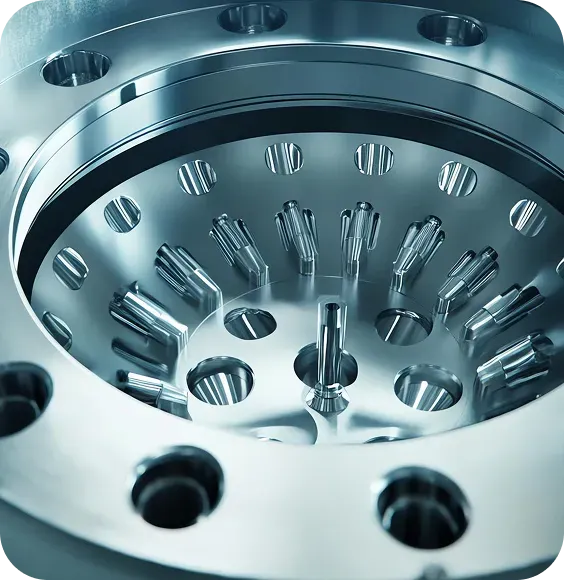
Learn how prototype manufacturing changes before full-scale production, from design and materials to quality, lead times, RFQs, and fabrication planning.
With prototype manufacturing in place, you can catch problems before they spiral out of control. That part may look perfect on a drawing, but it can behave in unexpected ways once it's formed, machined, welded, or assembled.
By the time you move into full-scale production, the stakes are much higher. The design not only has to work perfectly every time, but you also need a manufacturing process that's reliable and consistent. One that hits the right dimensions, materials, finishes, and quality every time, no matter how many orders you are fulfilling.
A good prototype proves your design will work: it does what you want it to, fits together right, looks right, and functions as intended. In contrast, moving into production requires not just a workable design but also a manufacturing process you can replicate over and over.
For OEM buyers and engineers, taking the leap into production isn't just a matter of ordering more parts. You need to revisit several decisions before you even start mass production.
People Also Ask
What is the main difference between prototype and production manufacturing?
Prototype manufacturing helps you test and refine a design. Production manufacturing focuses on making the approved part consistently using a repeatable process.
When should a prototype move into production?
Move forward when the design is stable, the required material is confirmed, tolerances are understood, and the proposed manufacturing process can produce the part consistently.
Why should you review manufacturability before production?
A review can identify difficult bends, unnecessary tolerances, poor weld access, machining concerns, or assembly problems before they repeat across a larger order.
Understanding Prototype Manufacturing
A prototype is built to answer questions.
Will the part actually fit? Are the holes lined up right? Can the material behave as expected? And is there enough clearance for welding to be a breeze? Does the assembly play nice with the other components?
Changes at this point are a normal part of the process. You might discover that a bend needs a bit more room to breathe, or that a tolerance is causing manufacturing headaches without improving the end result. You might need to tweak weld locations, hole patterns, machining features, or even assembly steps to get it just right.
The beauty of prototype work is that you can learn from it. Spotting a problem on one prototype is much easier than tracking it down after a big batch has rolled off the production line.
Prototype work doesn't just confirm how the thing looks; it's much more useful to your engineering team if it lets them see how the design behaves when it gets made for real.
Moving From Prototype to Production
A working prototype is a good sign, but it does not automatically mean the design is ready for production manufacturing.
Production requires consistency.
Before releasing a part, confirm the drawing revision, material specification, dimensions, tolerances, finish, inspection needs, assembly requirements, quantity, and delivery expectations. Any open question can create delays once purchasing and production planning begin.
The manufacturing process should also be reviewed as a complete sequence. A part may move through cutting, forming, machining, welding, finishing, assembly, and inspection. Each operation affects what happens next.
An industrial fabrication service needs enough information to plan those steps before production starts. Clear information at the RFQ stage reduces unnecessary back-and-forth and helps engineering and manufacturing teams work from the same requirements.
Production volume can also change how machining, setup, and workflow are planned. Understanding how manufacturers approach low- and high-volume machining can help engineering teams prepare a more practical transition from early parts to repeat production.
Design Changes Before Manufacturing Scales
Small design details can become major production issues when repeated across an order.
Take a sheet metal component with a hole positioned very close to a bend. It may be possible to make the prototype, but the location could create forming difficulties during repeat production. Moving the hole or changing the bend geometry may produce a more practical design without affecting how the part functions.
The same review applies to weld access, machining features, tolerance stack-up, hardware locations, part orientation, and assembly sequence.
Engineers do not need to remove every complex feature. They do need to know which features are necessary.
If a tight tolerance supports fit or function, keep it. If it adds work without changing performance, it deserves another look before production begins.
That is the practical role of manufacturability review during product development
Material Selection During Product Development
Material choices often become more specific as product development moves forward.
An early prototype may mainly test shape, fit, or function. Production planning has to consider the exact material required for the finished component.
Material grade matters. So do thickness, formability, machining requirements, welding characteristics, finish, and availability.
Writing only “stainless steel” or “aluminum” on an RFQ may leave important questions unanswered. Identifying the required grade and other material specifications gives the manufacturer clearer information for sourcing and process planning.
Pen Manufacturing works with materials that include aluminum, stainless steel, brass, carbon steel, bronze, and alloy steels for machining and fabrication applications.
Selecting the production material early can also prevent an uncomfortable situation where a design is approved using one material and then needs further changes when the final material reaches the shop.
Quality Requirements at Each Stage
Prototype inspection is often focused on a particular question. Production inspection needs a broader plan.
Suppose an engineer is testing whether a fabricated enclosure fits around an existing assembly. During prototyping, several dimensions may receive most of the attention.
Once the design moves into production, the manufacturer needs to know which dimensions, features, finishes, and assembly points must remain consistent.
The drawing should make those requirements clear.
Revision control deserves equal attention. Sending an outdated drawing can result in a well-made part that no longer matches the current design.
Quality planning should therefore move alongside the design rather than being added after production begins.
Cost and Lead Time Considerations
Prototype and production costs behave differently.
With a prototype, setup and programming effort may be spread across only a few pieces. Production creates different questions around material quantities, repeat setups, fixtures, inspection, outside finishing, assembly, and production scheduling.
Lead time also depends on more than machine time.
Material has to be available. Fabrication capacity must be planned. Inspection, finishing, assembly, and delivery may also need to fit into the schedule.
A detailed RFQ helps an industrial fabrication service understand the complete job sooner.
Include the latest drawings, revision level, material, tolerances, quantity, finish, inspection requirements, assembly details, and requested delivery timing. Missing information often turns into additional questions before a quote or production plan can move forward.
Complete drawings and production requirements make quoting easier for both sides. Following clear RFQ best practices for OEM procurement teams can reduce unnecessary questions before material and production planning begin.
Prototype Manufacturing and Production Manufacturing Compared
Key Takeaway
Moving from prototype manufacturing into full production is a change in approach, not just quantity.
The prototype helps you learn what works. Production requires you to turn those lessons into clear drawings, confirmed materials, practical tolerances, inspection requirements, and a repeatable manufacturing process.
For industrial metal fabrication projects, reviewing those details before release can prevent avoidable questions, redesigns, and production disruptions later.
Pen Manufacturing supports OEM customers with U.S. based manufacturing capabilities across fabrication, machining, welding, assembly, and related production needs. Bringing manufacturing input into product development earlier gives your team a clearer path from the first workable part to repeat production.

Director of Operations
Jonathan Nguyen is a supply chain and operations leader with more than 22 years of experience driving procurement, vendor management, international logistics, and operational excellence across diverse industries. Throughout his career, he has developed… Read More